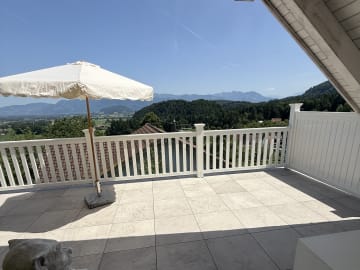
Timber patio roofs
Timber patio roof in the Rhine Valley: structure, installation, roof cover, junctions and drainage planned cleanly, with references from Oberriet, Gams and Wangs.
References
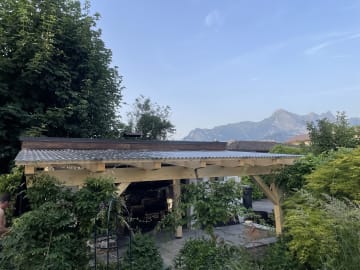
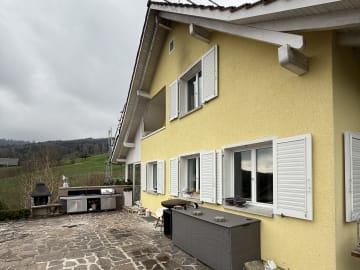
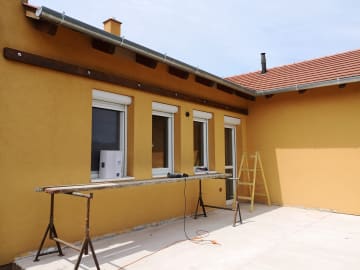
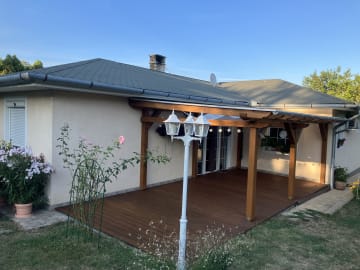
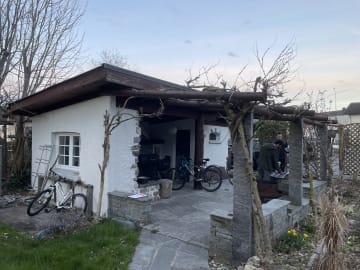
Projects from Wangs, Oberriet and Gams show patio roofs that fit the existing building visually and are executed cleanly.
At a glance
Use cases
For terraces, seating areas, entrance zones or free-standing garden spots - wherever weather protection, more usable days and a clean structure matter.
Structure & roof cover
The structure can be attached to the facade or free-standing. Roof cover is chosen by use case, light, upkeep and the existing building.
Price logic
Cost depends mainly on span, roof cover, foundations, drainage and visible timber quality. After photos and site measure, we give a realistic range.
Installation & details
We start with site measure, use case, permits and rainwater routing. After that comes workshop prefabrication and a short, clean installation with defined junction details.
Patio roofs in the Rhine Valley: start with use and the existing building
For projects attached to an existing building, the search term is not the main driver. The real use case matters more: terrace seating, front entrance, detached garden area or compact canopy all need different answers.
For enquiries from Sevelen, Sargans, Oberriet and Buchs, we first clarify use, daylight, headroom and the condition of the existing terrace surface or facade.
Only then do we define whether the right answer is an attached patio roof, a free-standing seating cover, a compact canopy or a pergola-like solution, and which roof material fits that use.
- Roof type chosen by weather protection, light, upkeep and budget
- Attached or free-standing based on the building and outdoor layout
- Permits, foundations and water route clarified early
- Installation planned so access and outdoor use stay manageable
Plan drainage and junctions before fabrication
Many roof projects fail at the edges, not in the timber frame itself. That is why drainage, slope and junction logic are defined before workshop production starts.
Attached roofs need clean planning for wall junctions, drip edge, slope and the transition into the existing terrace finish. Free-standing roofs add questions around splash water, edge protection and controlled runoff.
Depending on the system, drainage can be visible with gutter and downpipe or integrated into the front beam and posts. What matters is that rainwater routing belongs to the roof concept from day one.
- Gutter and downpipe treated as part of the roof concept, not an afterthought
- Water route coordinated with facade, terrace finish and surrounding use
- Junction details fixed before workshop prefabrication
- Even compact entrance canopies need the same drainage discipline
Which roof suits which outdoor area?
The right roof depends on use, building junctions, daylight and how weatherproof the space really needs to be.
Attached patio roof
The classic roof for a terrace or seating area directly at the facade. Wall junction, slope and drainage must be planned early.
Free-standing seating roof
For garden seating, dining or detached covered zones away from the facade. Foundation and wind exposure become more important.
Entrance canopy / small roof field
Compact roof areas at the entrance, side path or transition zone. Small in size, but still detail-driven in edge, drip and drainage logic.
Pergola / lighter weather cover
For shading, structure and a lighter appearance where full sealing is not the first priority.
Roof covers chosen by use, light and upkeep
Roofing should be selected by function and trade-off, not by keyword alone.
Trapezoidal sheet metal
Robust, practical and cost-conscious for weather-focused roofs and canopies.
Corrugated or profiled sheets
A practical roof field for simpler geometries, lighter canopies and selected seating roofs.
Polycarbonate
Lightweight and impact-resistant with UV-protected grades. Useful when a bright covered area matters.
Acrylic
Clearer long-term look, strong UV stability and high light quality where transparency matters.
Timber look and finish matched to the building
Visible glulam / structural timber
Clean geometry and visible structure for a deliberate timber expression.
Natural, stained or colour-matched finish
The structure can remain natural or be treated to suit the facade and surrounding material language.
Foundation, installation and drainage
Screw foundations where suitable
A clean low-excavation option for selected lighter structures when access, soil and loads allow it.
Classic foundations where required
Often the cleaner solution for larger spans, higher loads or more permanent support logic.
Gutter, downpipe and water route
Rainwater handling is part of the roof concept from day one, not a late add-on.
Costs / budget frame
A small entrance canopy is priced differently from a large free-standing seating roof. That is why we prefer a realistic range and clear cost drivers.
Main price drivers:
- Span and structural requirements
- Attached or free-standing
- Roof cover and daylight solution
- Visible timber quality and finish
- Foundation and ground conditions
- Drainage and junction details
- Side protection or shading
Guide only. Final pricing follows site measure, roof choice, foundations, drainage and connection detailing.
Scope
- Visible glulam/structural timber frame, natural or colour-treated
- Roof cover: trapezoidal sheet, corrugated/profiled sheets, polycarbonate or acrylic
- Drainage with gutter, downpipe and a planned water route
- Options: shading, lighting, side protection, screw foundations where suitable
Process
- Clarify site measure, use case, roof type and permits
- Plan structure, foundations and drainage
- Prefabricate, install and finish clean junction details
Regional detail pages
Common questions
Which roof cover is the better fit: trapezoidal sheet, polycarbonate or acrylic?
Trapezoidal sheet is robust and cost-conscious for weather-focused roofs. Polycarbonate brings daylight with low weight and good impact resistance. Acrylic suits projects where clarity and UV stability matter strongly.
Can the structure be free-standing or attached to the facade?
Yes. Both belong to the same service family. Attached roofs prioritise facade junctions and drainage. Free-standing roofs place more emphasis on foundations, wind and bracing.
Can the same service also cover a small canopy or entrance roof?
Yes. A compact entrance canopy uses the same timber and detailing logic as a larger seating roof. The dimensions change, but drip edge, edge details and rainwater handling still need to be planned properly.
Do I always need a gutter and a downpipe?
Rainwater routing must always be planned for weather-focused roofs. It can be visible with a classic gutter and downpipe or integrated into the roof system. The key issue is not visibility, but where the water goes and how the building stays protected.
Is a screw foundation possible?
Sometimes yes. For selected smaller and medium structures, a screw foundation can be a clean option if loads, soil, geometry and access allow it. It is not universal and should only be decided after review.
Region
Gams, Sevelen, Buchs, Alt St. Johann, Wildhaus, Unterwasser, Sargans, Mels, St. Gallen, Herisau, Gossau, Wil SG, Uzwil, Flawil