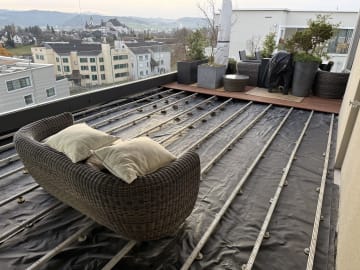
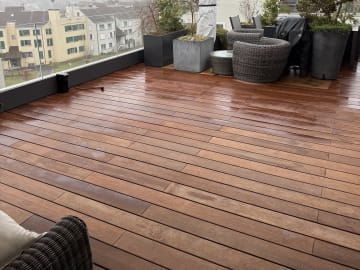
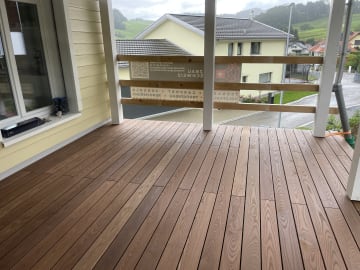
We install and renew timber and WPC decks in the Rhine Valley, throughout the canton of St. Gallen and in Liechtenstein. We plan the substructure, slope and junctions to suit the ground and the height of your terrace.
Compare timber and WPCMaterials and guide pricesGenuine projects from Eastern Switzerland
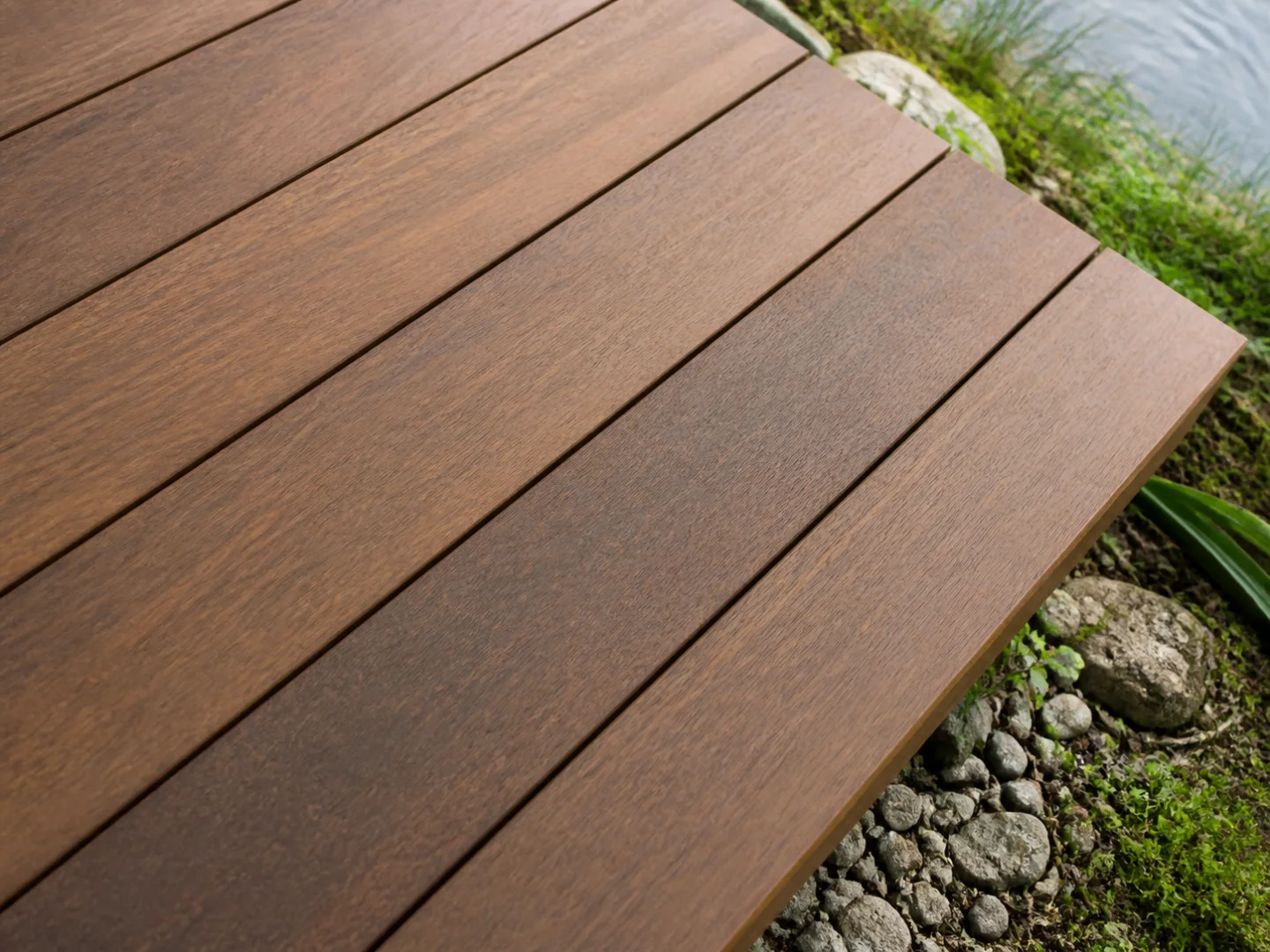
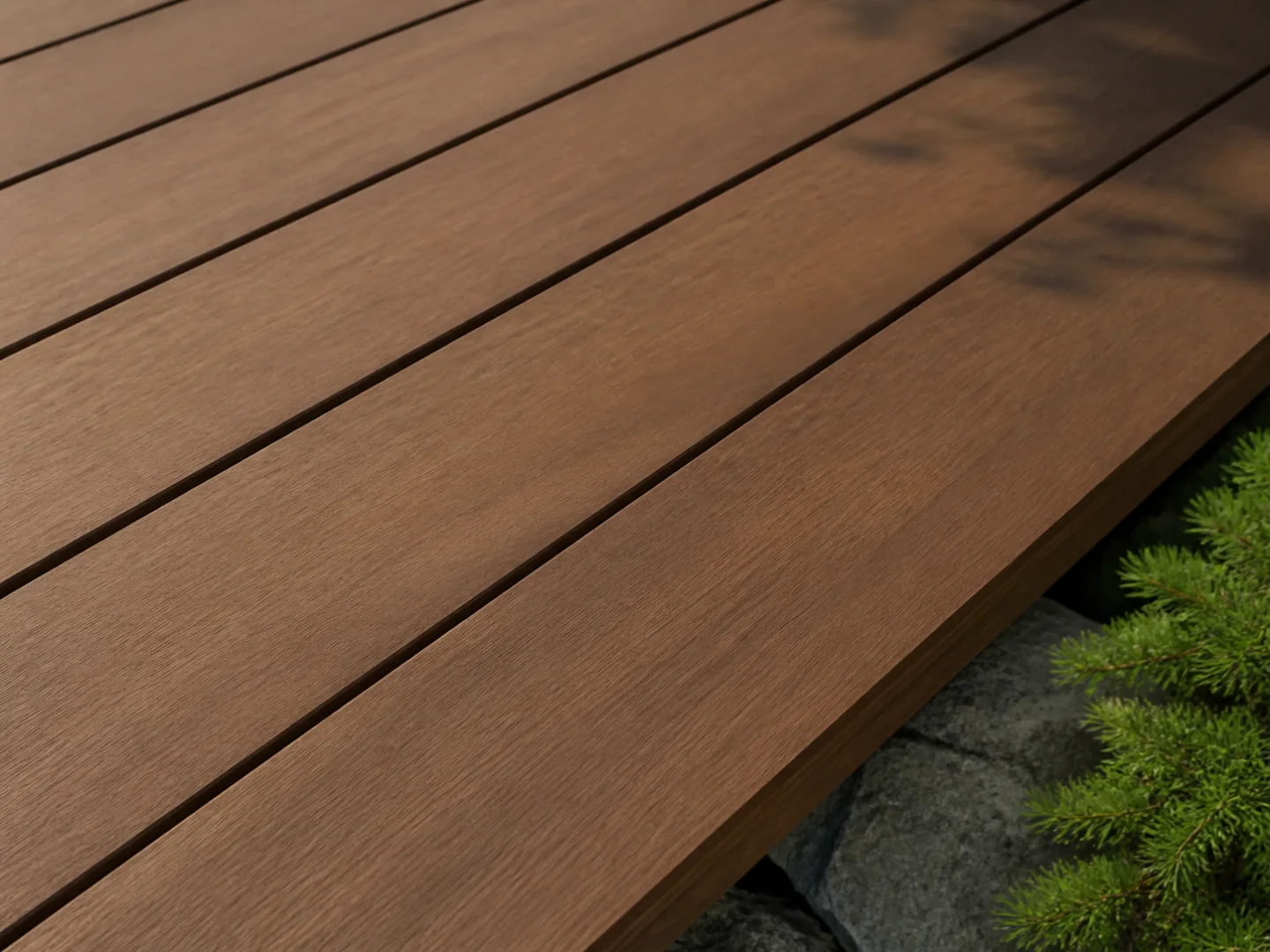
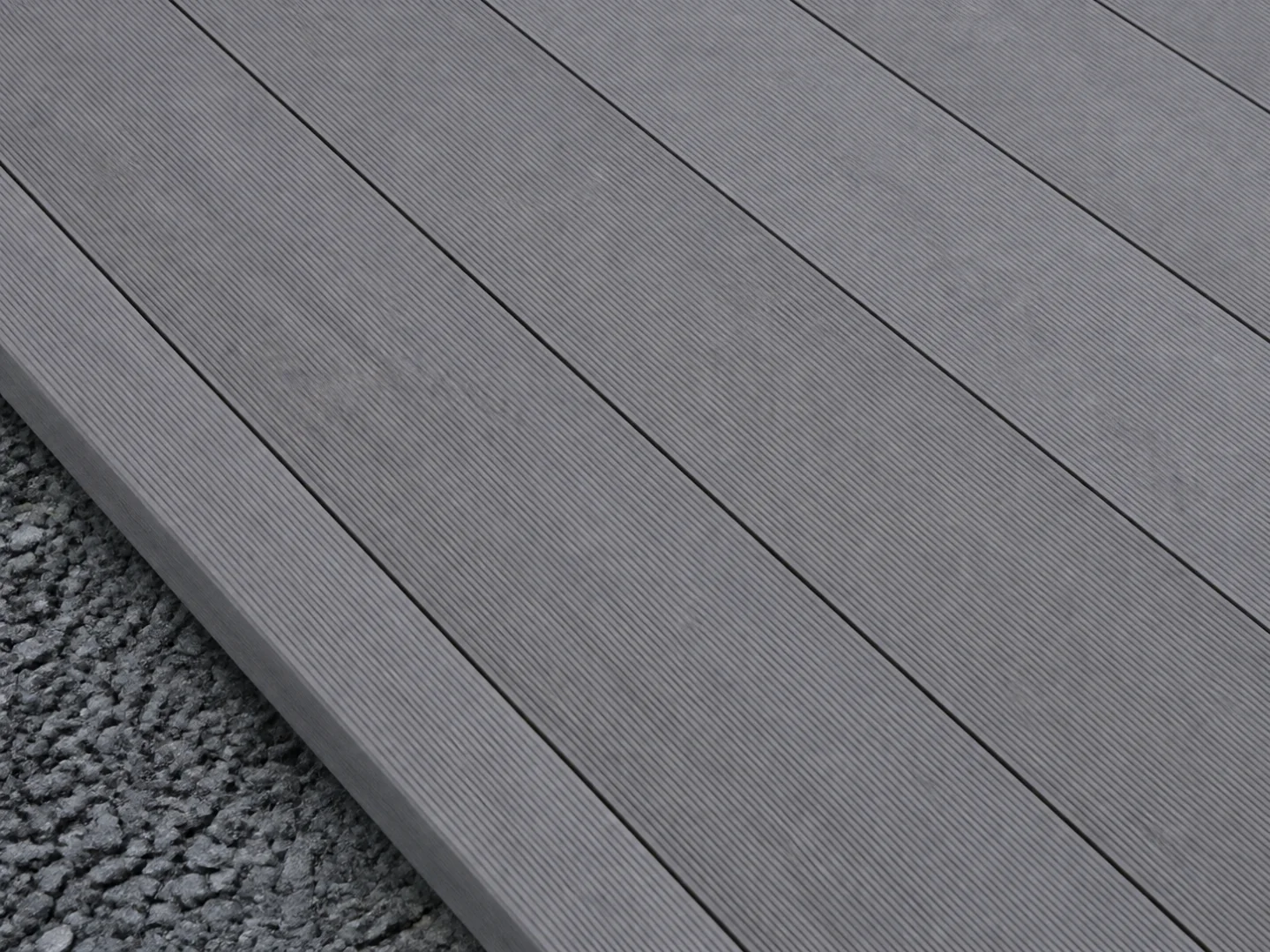
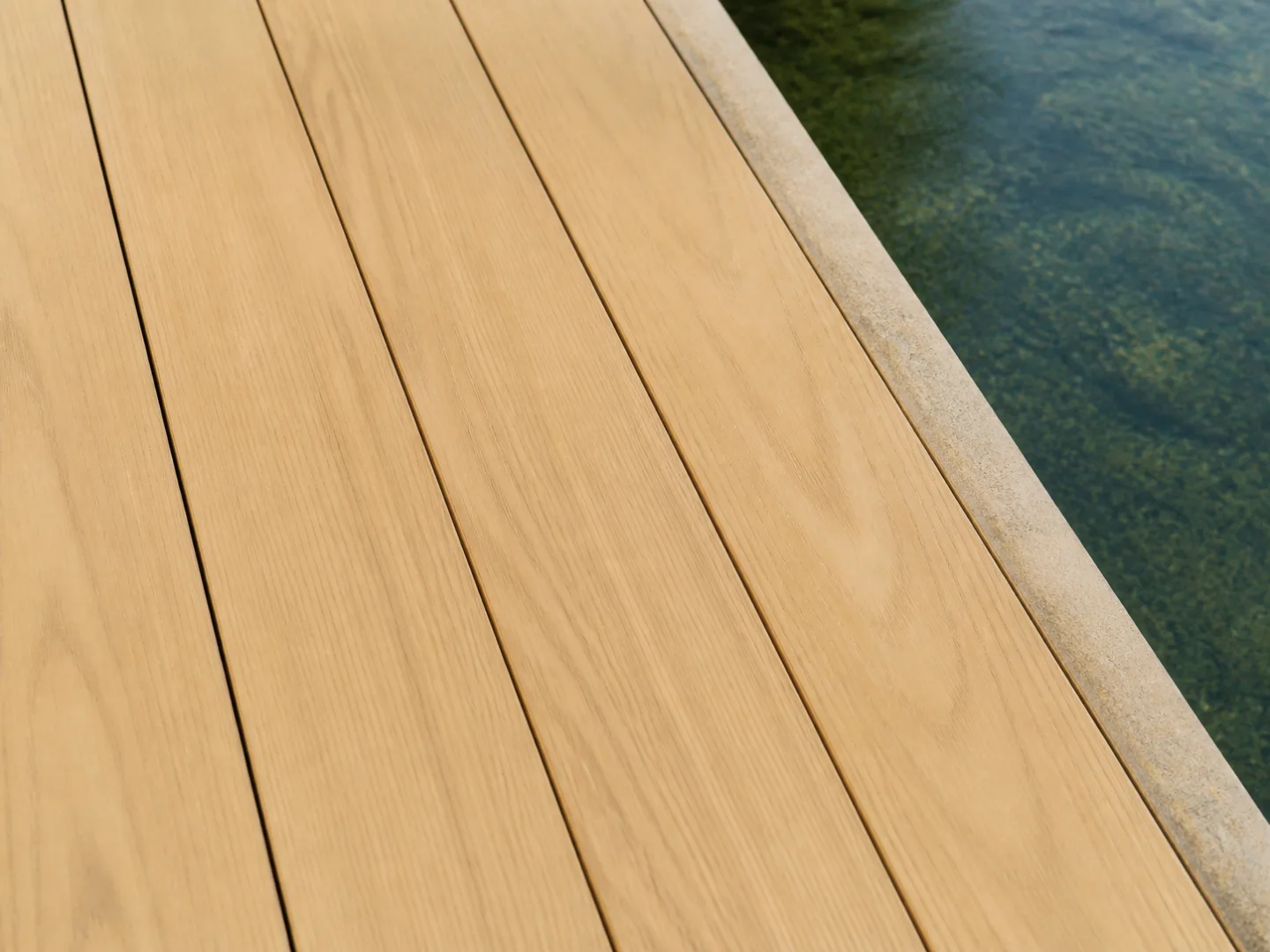
Timber has a natural grain and develops a patina outdoors. Keeping its original colour requires regular care. WPC has a more uniform appearance and usually needs less surface care, but still needs cleaning.
Materials and guide prices
Compare 13 timber and WPC materials. Prices are per m² for the standard build described below.
Guide prices for orientation. We provide a binding quote after site measurement and material selection.
Unless stated otherwise for the material: a rectangular 30 m² terrace, normal access and a 10% material allowance.
Included: boards, compatible standard substructure, system fixings, accessories, standard delivery and installation.
Removal, substrate and foundation works, special drainage, stairs, railings, special edges and extraordinary transport are calculated separately.
Before quoting, we check the existing base and the height at doors and the facade. Load-bearing components may be reused if they suit the chosen system.
The material images are illustrations, not binding colour or profile samples. Choose materials using a physical sample.
Timber boards
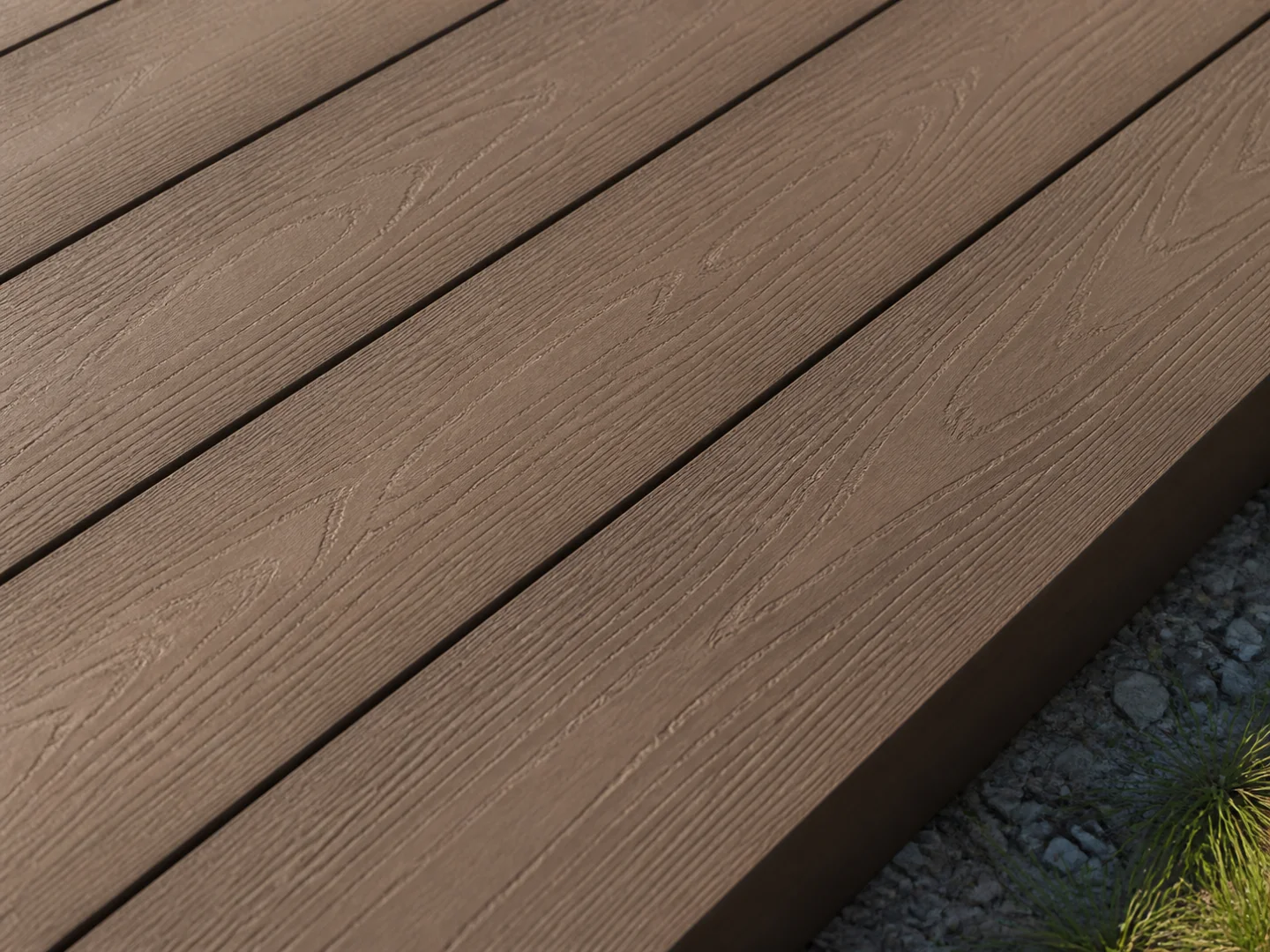
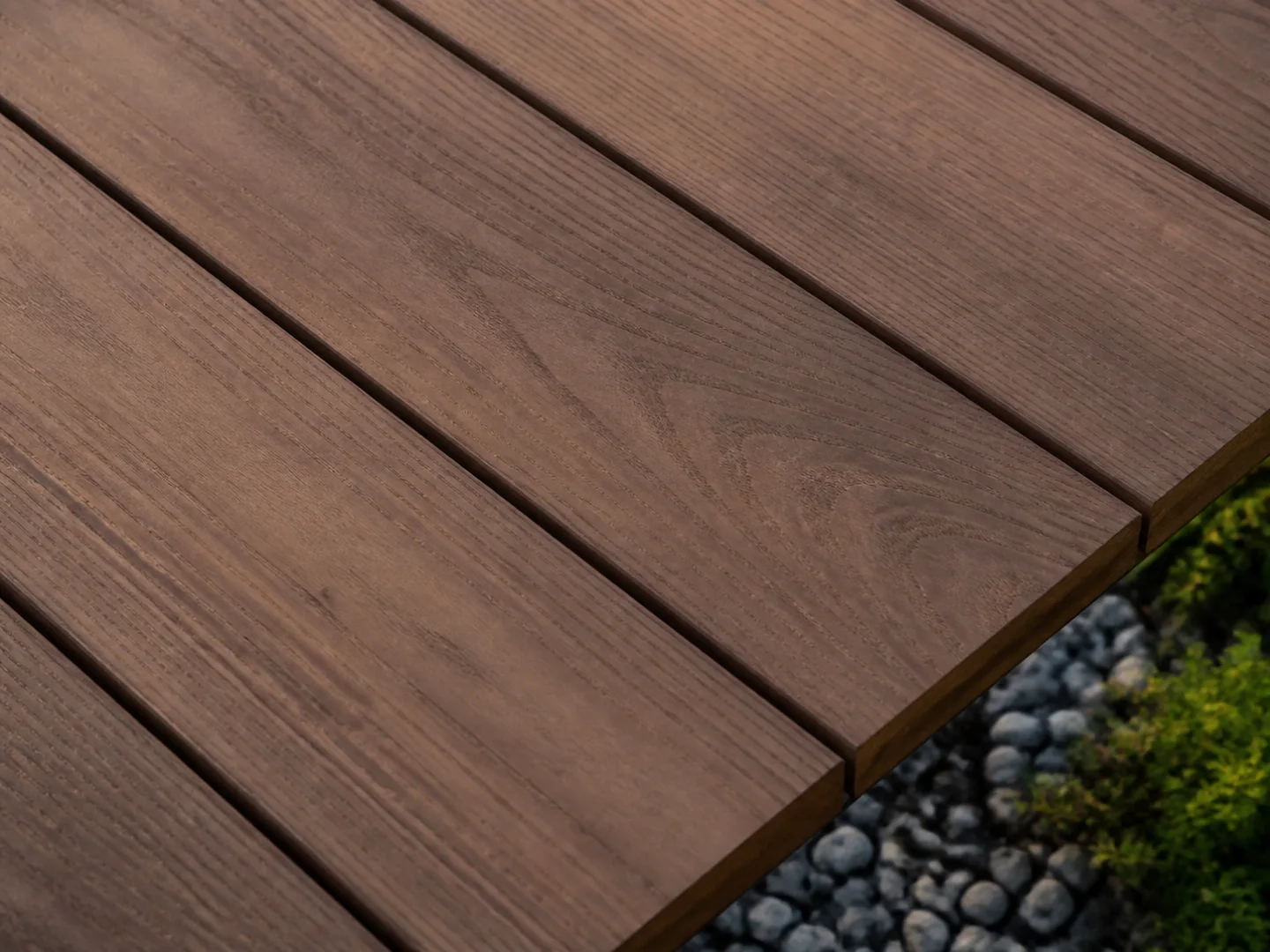
Thermoeschefrom 375 CHF/m²Material and care
Warm, elegant and dimensionally stable with a calm joint pattern.
Care & ageing: Naturally turns silver-grey; oil preserves the warm brown tone longer.
Illustrated example finish: Thermally modified ash 20 x 118 mm, raw and planed
Ipé / Lapachofrom 440 CHF/m²Material and care
Dense premium timber with a distinctive, refined depth.
Care & ageing: Very durable; regular care keeps the colour richer.
Illustrated example finish: Ipé / Lapacho 20 x 100 mm, raw and planed
Kebony Clearfrom 415 CHF/m²Material and care
Knot-free, even surface with a clean architectural look.
Care & ageing: Develops an even silver-grey patina without coating.
Illustrated example finish: Kebony Clear 22 x 142 mm, smooth
Accoya Color Greyfrom 485 CHF/m²With a new aluminium substructure; guide price for approx. 33 m².Material and care
Grey-through colour for a calm appearance from day one.
Care & ageing: Low upkeep; natural weathering remains visually harmonious.
Illustrated example finish: Accoya Color Grey 25 x 145 mm, finely grooved
AccoyaPrice on requestMaterial and care
Light premium surface with excellent dimensional stability.
Care & ageing: Durable and coating-friendly; naturally greys when untreated.
Illustrated example finish: Accoya Premium 25 x 145 mm, sanded
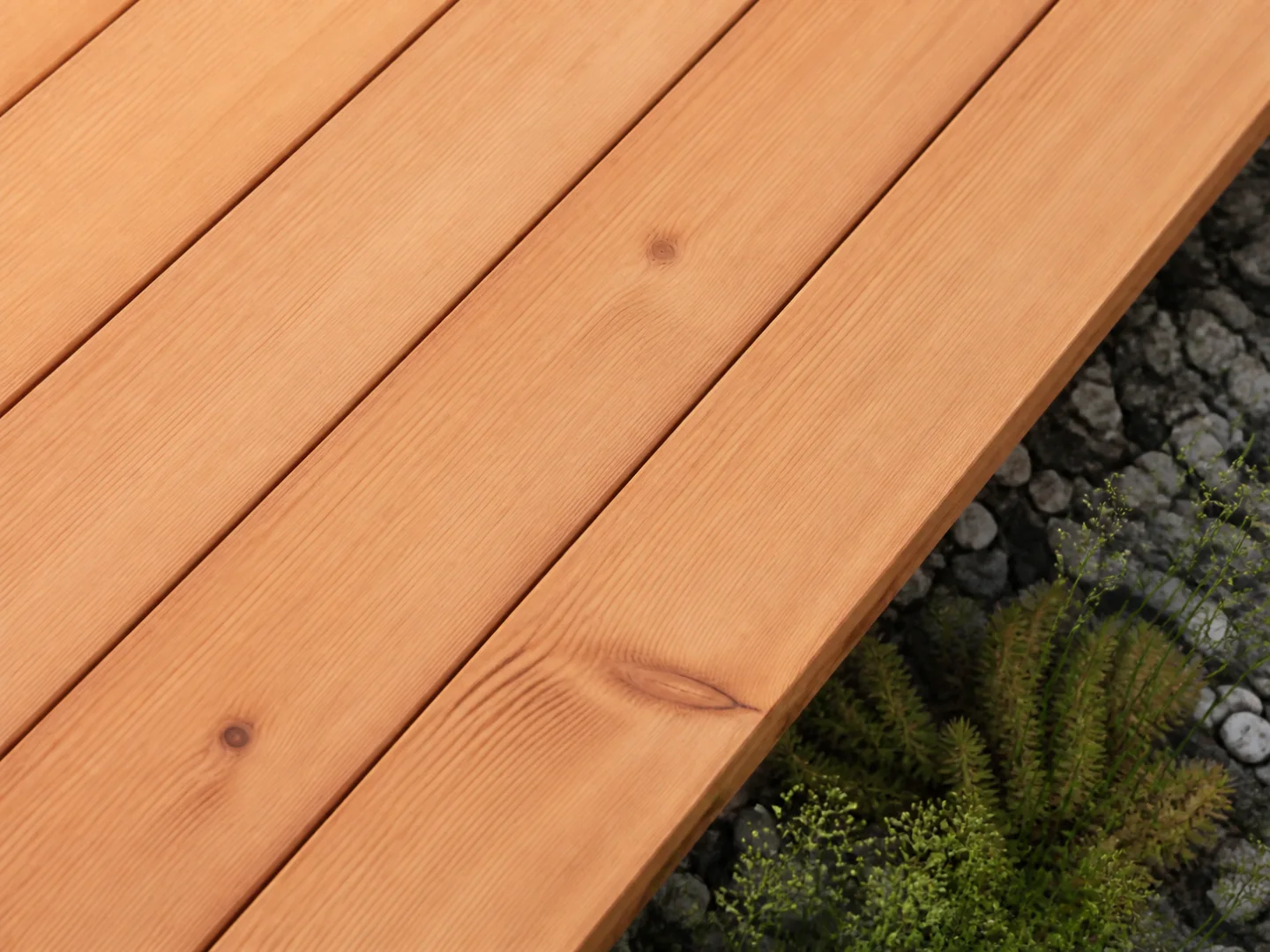
Douglasie heimisch astarmfrom 345 CHF/m²Material and care
Regional timber with a warm look and lively grain.
Care & ageing: Regular care recommended; natural checking and patina may occur.
Illustrated example finish: Regional low-knot Douglas fir 26 x 115 mm
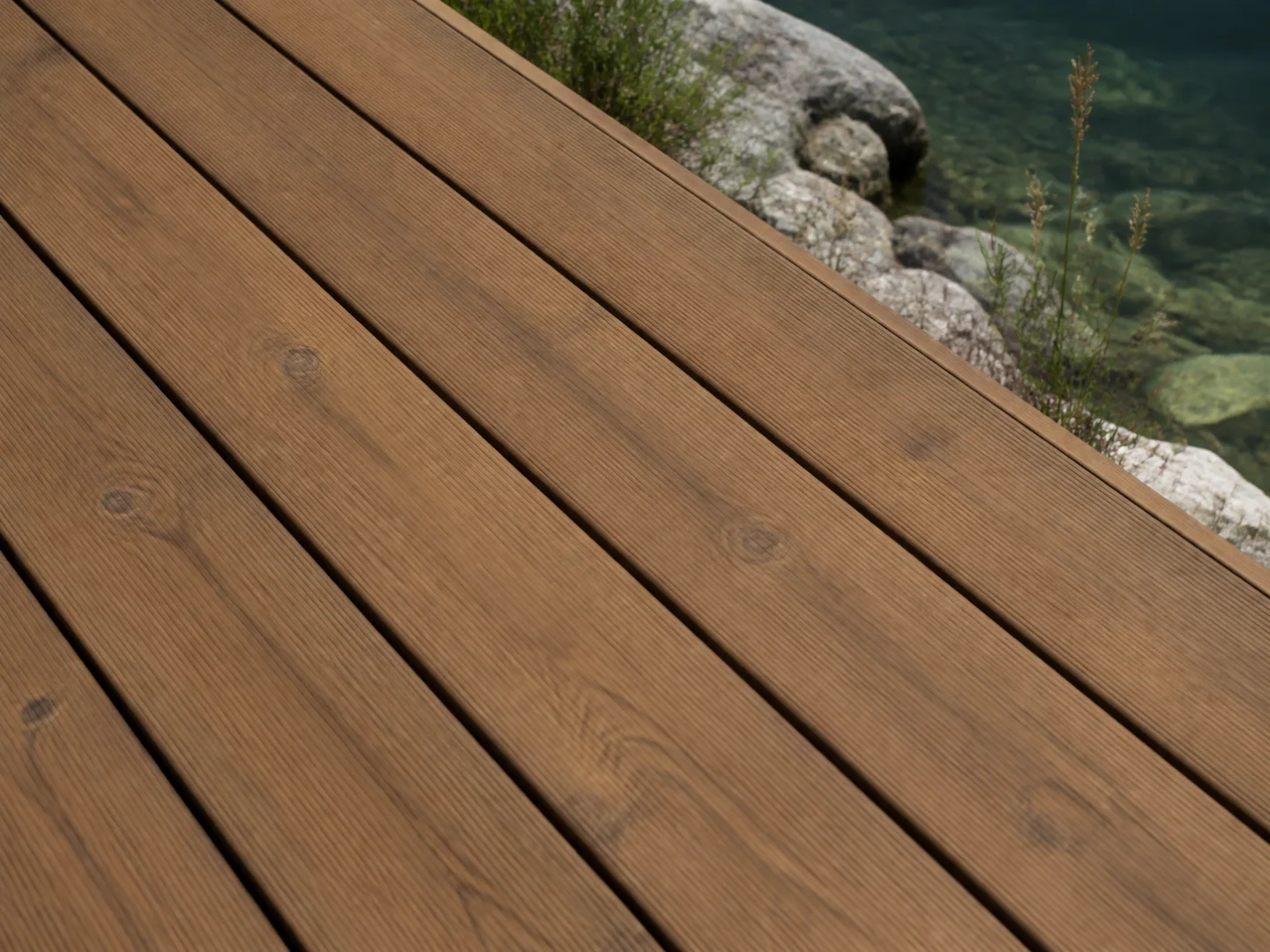
Nordische Thermokieferfrom 290 CHF/m²Material and care
Expressive, warm thermowood surface with natural structure.
Care & ageing: Naturally greys; requires a properly ventilated build-up.
Illustrated example finish: Nordic thermally modified pine 27 x 117 mm, brushed
WPC boards
Megawoodfrom 390 CHF/m²Material and care
Solid composite board with natural embossing and many colour options.
Care & ageing: Low-maintenance; system joints and manufacturer build-up are essential.
Illustrated example finish: Megawood Signum, Muskat colour
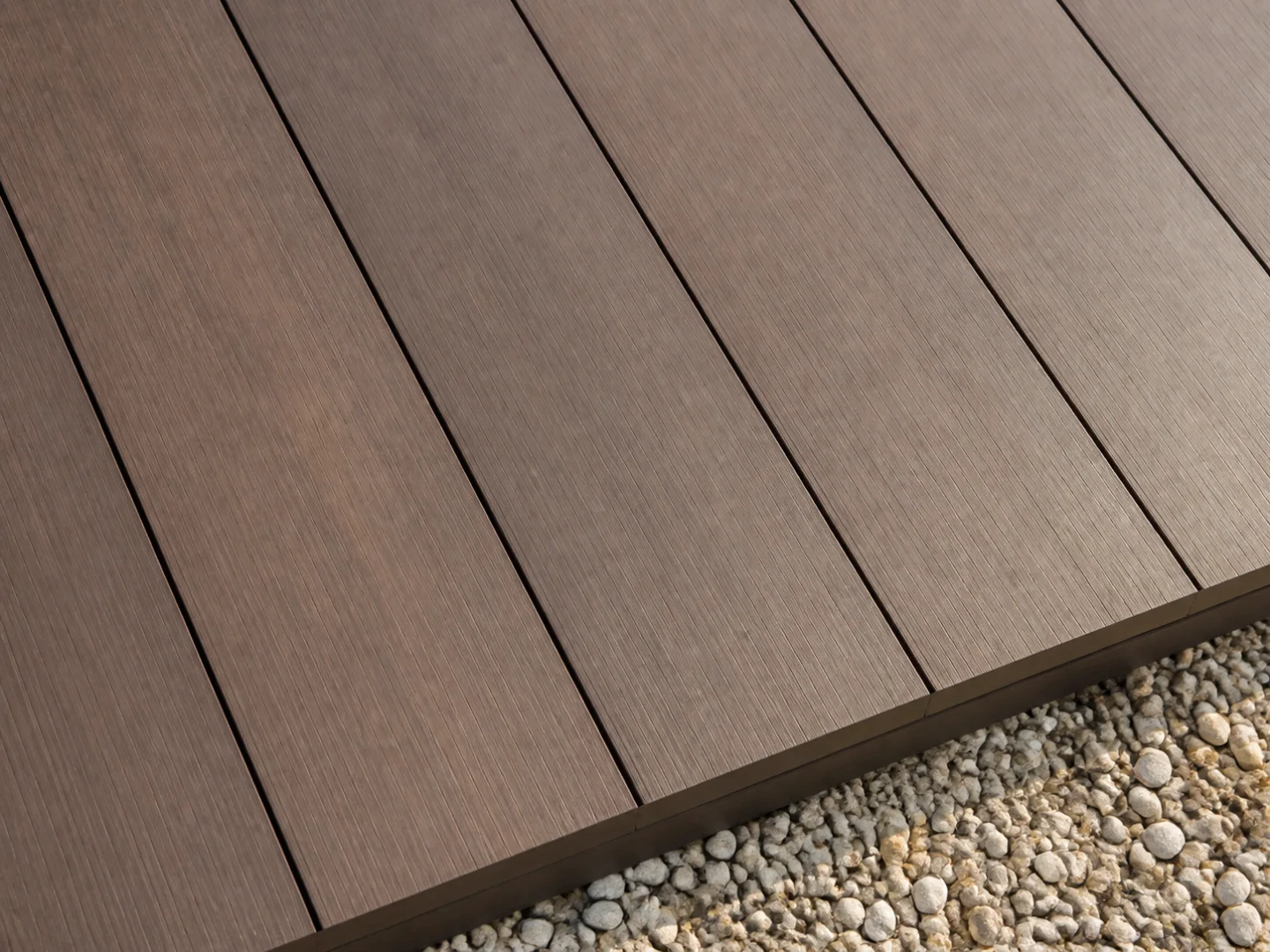
Forexia Atmosphèrefrom 370 CHF/m²Material and care
Modern, resilient surface with a calm colour effect.
Care & ageing: Very low-maintenance; regular cleaning is usually sufficient.
Illustrated example finish: Forexia Atmosphère, Lima Brown, brushed
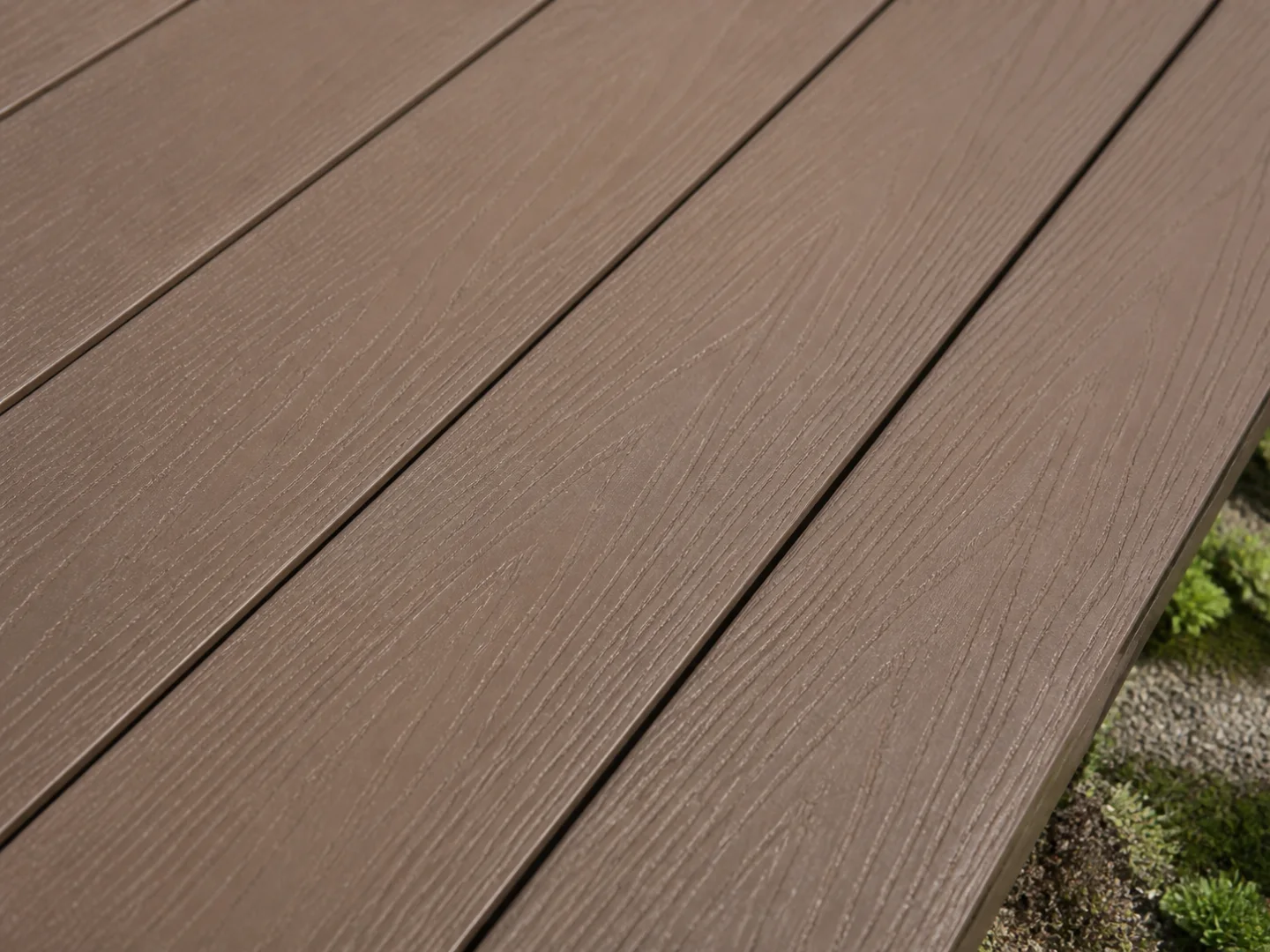
Forexia Elégancefrom 345 CHF/m²Material and care
Classic wood texture with an even overall appearance.
Care & ageing: Low-maintenance; initial colour development is typical for the material.
Illustrated example finish: Forexia Elégance, Colorado Brown, textured
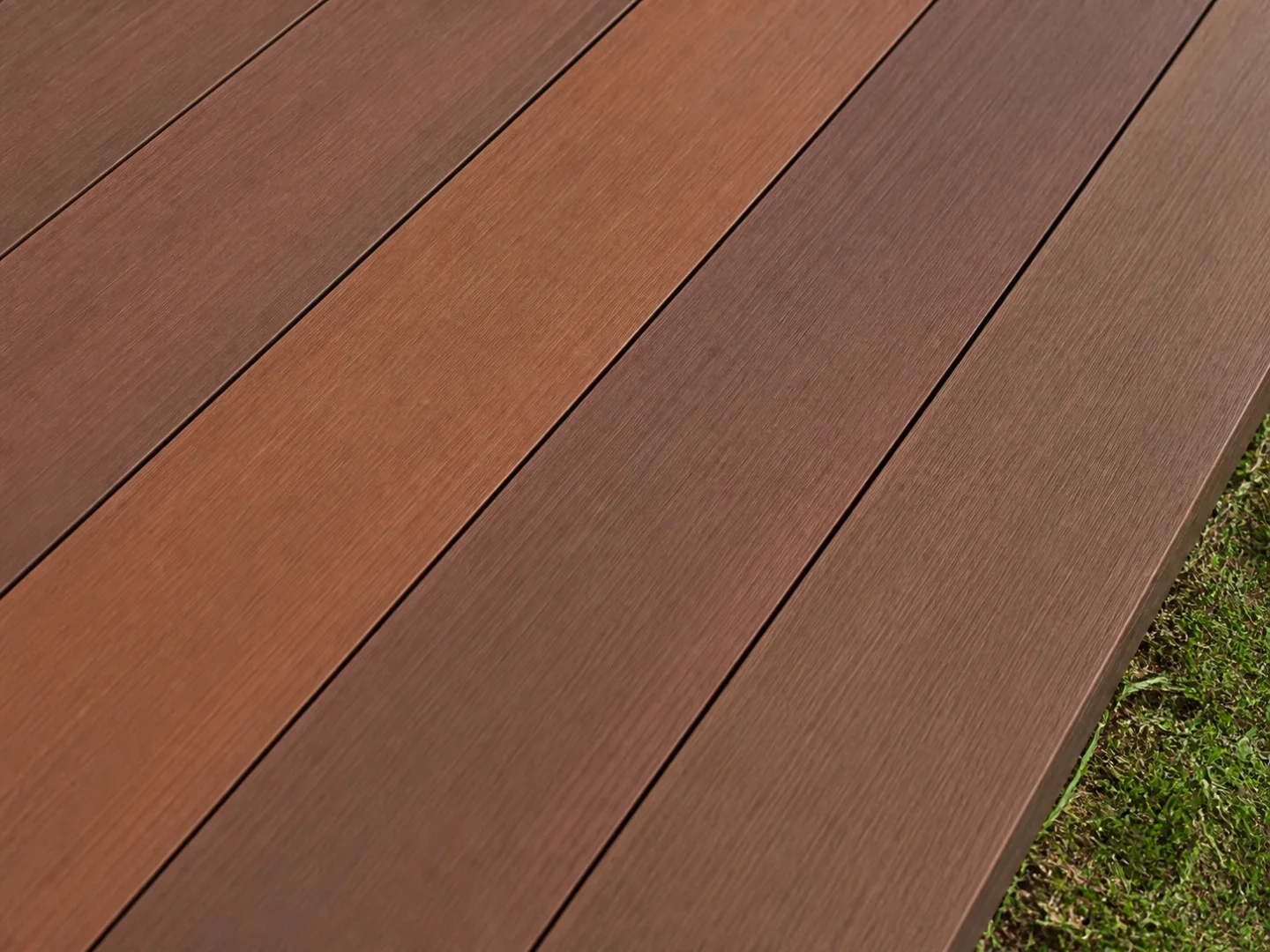
Forexia Nuancesfrom 375 CHF/m²Material and care
Lively colour nuances for a less uniform WPC appearance.
Care & ageing: Low-maintenance; the colour mix should be planned before installation.
Illustrated example finish: Forexia Nuances, assorted Ipé tones
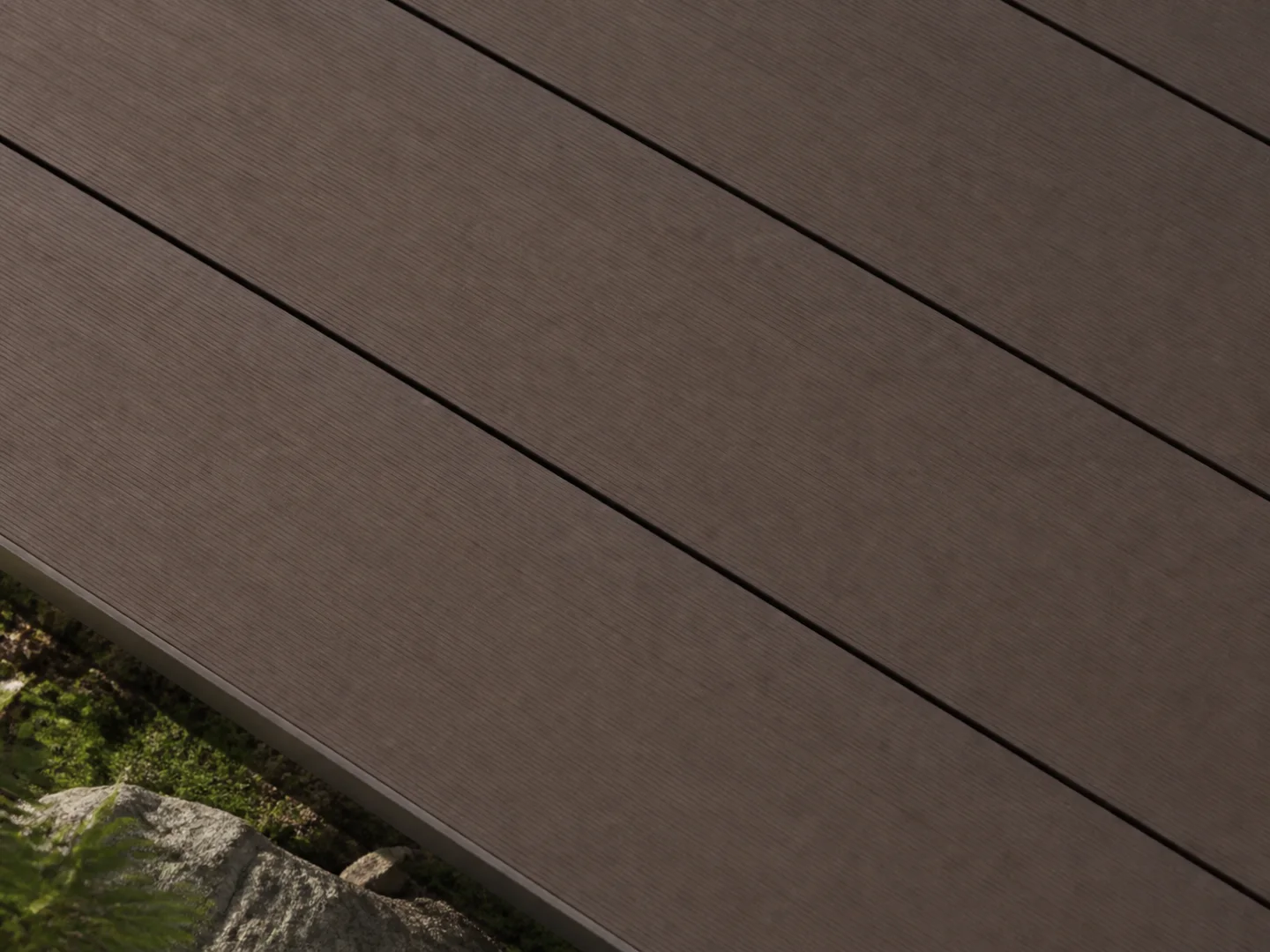
Lignodur Terrafina Loungefrom 375 CHF/m²Material and care
Wide, residential-style board with a calm matt surface.
Care & ageing: Low-maintenance; use the compatible system and required expansion joints.
Illustrated example finish: Lignodur Terrafina Lounge, Java, matt
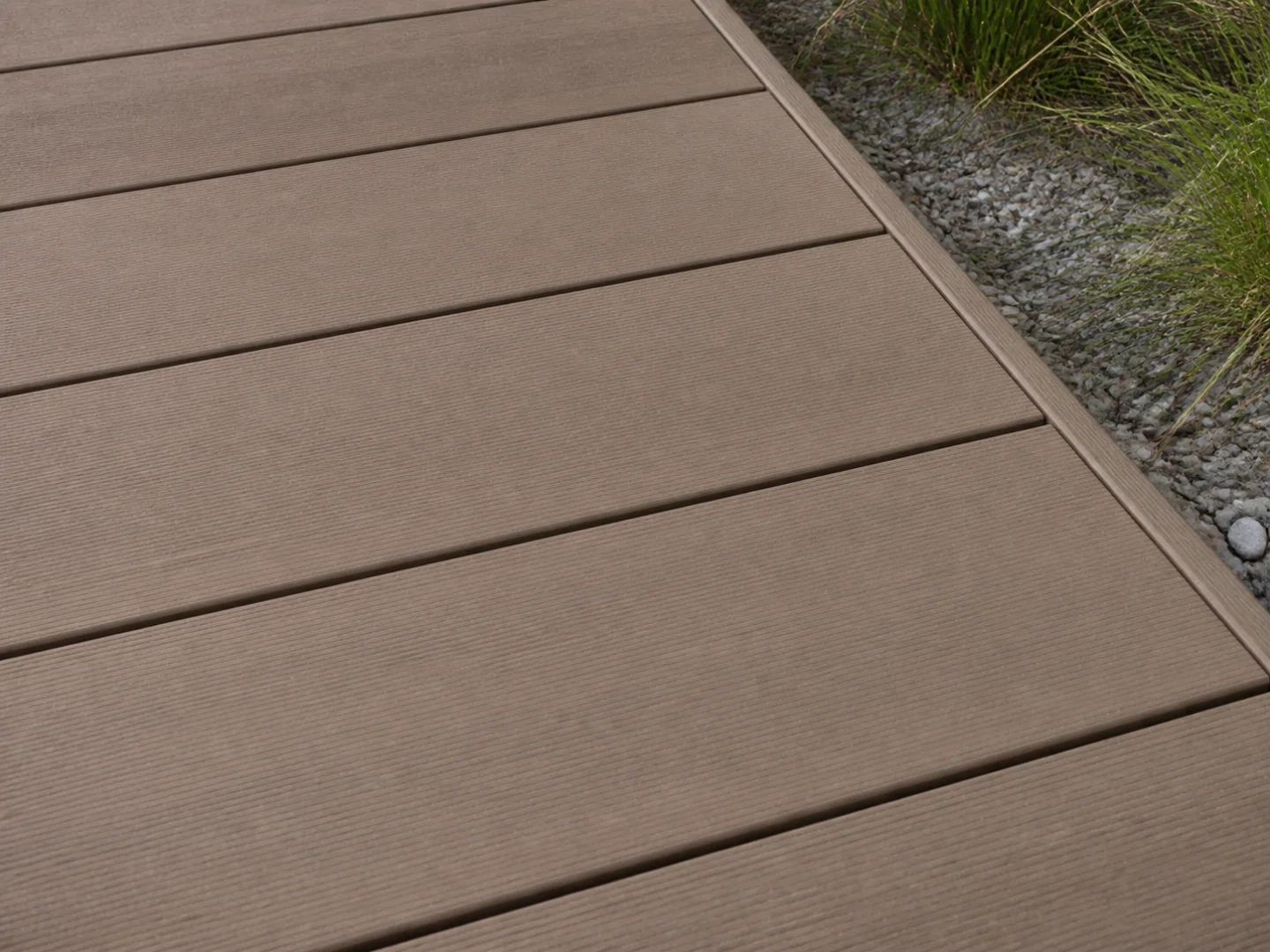
Lignodur Lounge Exclusivefrom 375 CHF/m²Material and care
Premium, spacious lounge look with a refined surface.
Care & ageing: Low-maintenance; correct system installation preserves the clean look.
Illustrated example finish: Lignodur Lounge Exclusive, Macchiato, matt
Fastenings, joints, slope and ventilation must suit the selected system. Hidden clips do not suit every board; visible stainless-steel screws are an option for compatible timber.
Common questions
How long does a terrace deck really last?+
A credible service life cannot be derived from the board name alone. It depends on the durability of both boards and substructure, rapid drying, adequate ventilation, working drainage, correct fastening and ongoing maintenance. Lignum recommends a substructure at least as durable as the decking. A specific number of years is meaningful only when product, build-up, use and warranty terms are all known.
No outdoor surface is slip-free in every condition. Profile, surface condition, moisture, slope, algae, leaves and dirt all affect grip; the Swiss BFU therefore recommends selecting the surface for its intended use and using tested values where the risk is higher. Regular cleaning and level installation without raised edges matter as much as the material. For pool surrounds, exposed stairs or demanding barefoot areas, the specific surface must be assessed rather than relying on a generic product label.
Which boards become hot in the sun, and what feels comfortable barefoot?+
Direct sun heats every surface; darker colours generally absorb more radiation and can become noticeably hotter than lighter ones. Timber is often perceived as warm and comfortable underfoot, but it can still heat up considerably. For an unshaded south-facing terrace, colour, texture and a physical sample should be assessed in sunlight. Barefoot comfort also depends on clean edges, low-splinter grading, safe fastening and regular surface inspection.
How do I care for timber and WPC, and does timber need oiling?+
Untreated timber develops a grey patina; for suitable decking timbers, this does not automatically reduce durability. Keeping the brown colour requires regular renewal of a suitable coating. Remove leaves and dirt from both timber and WPC and follow the product care guide. Test cleaners discreetly first; a concentrated pressure-washer jet can damage the surface.
It may be possible, but a visual inspection from above is not enough. Once opened, the material and durability, moisture or decay damage, level, fixings, supports, centres, ventilation and drainage path must be checked. The geometry must also suit the new board and fastening system. Only demonstrably sound and compatible sections should be retained; damaged or incorrectly spaced parts need replacement or reinforcement.
Can a new deck be built over slabs, a balcony or a flat roof?+
In principle yes, provided load capacity, waterproofing, available height, junctions and drainage have been checked. On hard or waterproofed surfaces, loads are distributed and the membrane is protected with compatible pads or pedestals; drains and inspection points must remain accessible. Existing slabs do not prove that the waterproofing is intact or the slope adequate. Planning therefore starts by establishing the water path, available build-up height and any special details at thresholds, railings and edges.
Which changes in timber and WPC are normal, and what may be a defect?+
Timber naturally varies in colour and grain, greys outdoors, and swells and shrinks within limits; depending on the species, fine surface checks or slight distortion may occur. WPC can undergo product-specific colour maturation after installation and moves with temperature. Loose fixings, raised edges, persistent standing water, soft or decaying components and excessive deformation should not simply be dismissed as normal ageing. These changes should be documented early and assessed professionally.
Gams, Sevelen, Buchs, Alt St. Johann, Wildhaus, Unterwasser, Sargans, Mels, St. Gallen, Herisau, Gossau, Wil SG, Uzwil, Flawil
Cookie settings
With your consent, we use Google to measure website use and the results of our ads. You choose analytics and ad measurement separately. You can contact us without consenting.




 Thermoeschefrom 375 CHF/m²Material and care